Burning Man Weather by Week: Why the Nevada Desert Swings 25°C Between Afternoon and 3am
Understanding Burning Man Desert Weather Conditions Before You Pack a Single Sequin
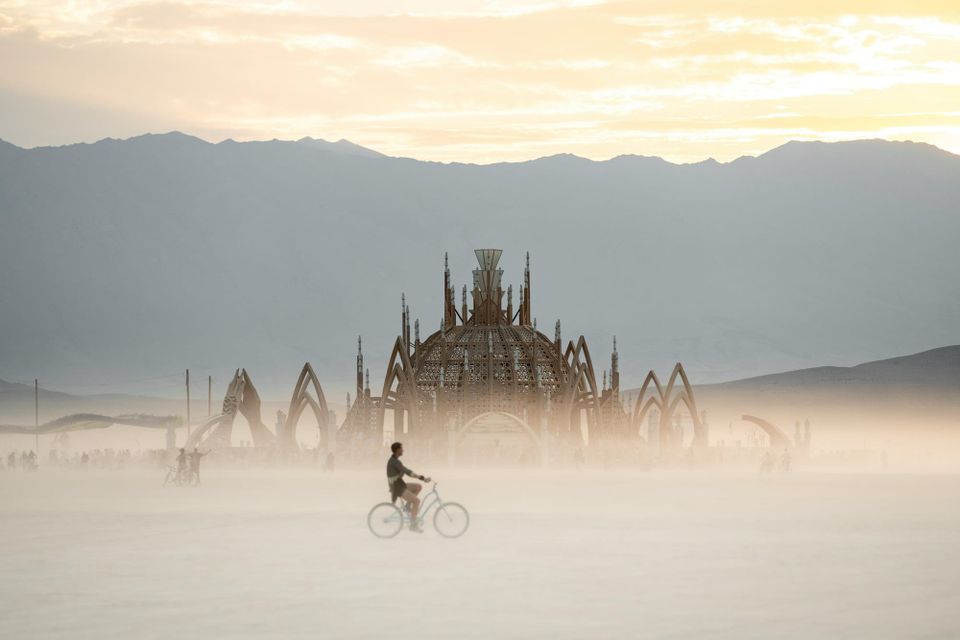
Black Rock Desert in late August runs hot, cold, and occasionally apocalyptic — sometimes within the same 12-hour window. Historical NOAA data for the Gerlach, Nevada area puts daytime highs between 35–40°C (95–104°F) during event week, while overnight lows regularly fall to 10–13°C (50–55°F). That 25°C (45°F) swing between peak afternoon and 3am is not an anomaly — it is the baseline. Add the playa's notorious dust storms, which can drop visibility to near zero in under four minutes, and a rain event that turns the alkaline lake bed into boot-sucking clay, and you have a weather environment that genuinely punishes under-preparation. What follows is a day-by-day weather breakdown built from historical patterns, not desert mythology.
Why the Black Rock Desert Behaves the Way It Does
Black Rock Desert sits at approximately 1,190 meters (3,900 feet) elevation in the Great Basin. That elevation is the primary reason for the dramatic diurnal temperature range. Higher altitude means thinner air, which heats rapidly under direct sun and loses heat just as rapidly once the sun drops. The playa surface — a flat, reflective alkaline lakebed with zero shade and zero moisture retention — amplifies both extremes. There is nothing to hold heat at night and nothing to block radiation during the day.
UV index at this elevation routinely reaches 9–11 (extreme) between 10am and 3pm. The reflected albedo from the white playa surface means UV exposure hits from below as well as above. Sunscreen on the underside of your chin is not optional theater — it is a legitimate recommendation.
Wind patterns in the Black Rock Desert are driven by pressure differentials between the heated playa floor and surrounding mountain ranges. This is what generates the haboobs — dust storms that roll across the open lakebed with minimal warning. Average wind speeds during Burning Man week run 15–25 km/h (9–15 mph), but gusts during storm events can exceed 80 km/h (50 mph).
Temperature by Day: The Weekly Arc
Burning Man runs Sunday to Sunday, typically spanning the last week of August into the first day of September. The temperature profile is not flat across the week — it follows a pattern worth knowing.
Early Week (Days 1–3): Arrival Window
The opening days tend to be among the hottest of the event. Late August in the Black Rock Desert averages daytime highs of 37–40°C (99–104°F). Ground surface temperatures on the playa run significantly hotter than air temperature — estimates from infrared measurements suggest playa surface can hit 60–65°C (140–149°F) at peak afternoon. Walking barefoot on the playa between noon and 4pm is not a lifestyle choice; it causes burns.
Overnight lows in this early window average 11–13°C (52–55°F). The shift from afternoon heat to overnight cold happens fast — temperatures drop roughly 1°C (2°F) every 20–30 minutes after sunset. Anyone who has gone back to camp at 9pm in shorts and sandals and stayed out past midnight knows exactly how that plays out.
Mid-Week (Days 4–6): The Core
Daytime highs moderate slightly through mid-week, averaging 35–38°C (95–100°F). This is also historically the period with the highest dust storm frequency. NOAA wind event data for the region shows late August afternoons — roughly 2pm to 6pm — as the peak window for strong, sustained gusts. Dust events during this period can last 30 minutes to several hours.
Overnight lows drop further into mid-week, often hitting 10°C (50°F) or below by the early morning hours of Days 5 and 6. The combination of fatigue, dehydration, and temperature drop at 4am is when hypothermia risk becomes real at Burning Man — a fact that gets underreported relative to the heat warnings.
Late Week and Burn Night (Days 7–8)
The Man burns on Saturday night. Historically, late-week temperatures trend slightly cooler as September approaches, with daytime highs averaging 33–36°C (91–97°F). Overnight lows remain in the 9–12°C (48–54°F) range. Wind events remain possible through the end of the event.
Burn night itself — with crowds gathered in an open field well past midnight — is frequently the coldest prolonged outdoor exposure of the entire week. A jacket is not a stylistic choice at that point.
Dust Storms: Frequency, Speed, and What They Actually Do to Conditions
Playa dust storms, locally called whiteouts, are the weather event most likely to interrupt plans, damage gear, and create a genuine safety situation. Based on historical event reports and regional wind data, attendees can expect 2–5 significant dust events per week, with at least one lasting more than an hour.
Visibility during a full whiteout drops to under 3 meters (10 feet). Conditions shift from clear to zero visibility in as little as three to four minutes as the storm front moves across the flat lakebed. There is typically some visual warning — a brown wall on the horizon — but response time is short.
Dust particle size on the playa is extremely fine — PM2.5 levels during storms spike dramatically. N95 masks are the functional minimum for respiratory protection. Bandanas provide comfort, not filtration. Goggles that seal around the eyes are not overcautious; they are the difference between a manageable event and a genuinely miserable one.
Electronic equipment, camera gear, and anything with moving parts will accumulate playa dust regardless of precautions. The dust is alkaline and abrasive. Plan accordingly.
Rain Probability: Low, but Catastrophic When It Happens
Average August rainfall for the Gerlach area is approximately 6mm (0.24 inches) for the entire month. Rain probability on any given day during event week is low — generally under 10%. However, when rain does occur on the playa, the alkaline clay surface becomes extremely sticky and nearly impassable within minutes. Vehicles sink. Bicycles become useless. Walking is genuinely difficult.
The 2023 event saw a rain event that left approximately 73,000 attendees stranded when the playa surface became impassable. That was an extreme case, but it illustrates what a low-probability event can mean in this specific environment. If rain is forecast during your travel window, take it seriously regardless of the percentage. Check the WeatherGO app before heading out to the deep playa — a 20% chance of rain means something very different on Black Rock than it does at a music festival with paved walkways.
Practical Weather Planning by Layer
- Sun protection (10am–4pm): SPF 50+ applied every two hours, including face, neck, and exposed scalp. Wide-brim hat rated for UV. Long sleeves in lightweight, breathable fabric are not heat-trapping — they reduce UV load and convective heating from direct sun exposure.
- Dust protection: Seal-fit goggles and N95 minimum for respiratory protection. Keep them within reach at all times, not buried in a bag at camp.
- Cold layer: A proper insulating mid-layer and windproof outer shell for overnight. 10°C (50°F) with 25 km/h (15 mph) wind produces a wind chill around 6°C (43°F). Fleece and a rain shell is a reasonable combination. A sleeping bag rated to at least 7°C (45°F) is appropriate — lower if you run cold.
- Footwear: Closed-toe shoes for daytime playa walking. The ground temperature risk is real. Sandals are fine in camp; they are a liability on open playa at peak heat.
- Hydration: Standard guidance is 1 liter (34 oz) per hour during peak heat and physical activity. Electrolyte replacement matters — water alone does not address sodium loss through sweat at this level of exertion and heat.
The One-Line Summary of Burning Man Desert Weather Conditions
The Black Rock Desert in late August is hot enough to burn skin on the ground surface, cold enough at 3am to cause hypothermia, and intermittently opaque with alkaline dust. None of that is dramatic framing — it is the documented baseline. Pack for all three scenarios simultaneously, not sequentially. The attendees who struggle are almost always the ones who planned for one of the three.