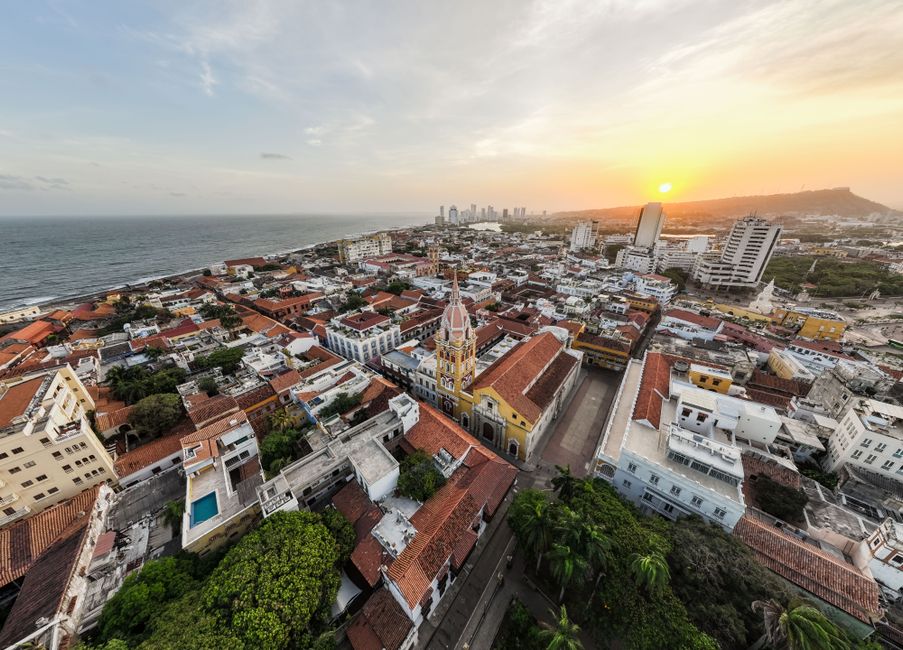
Lisbon in September: Why the First Week After Peak Season Is the Best Weather Window in Southern Europe
Lisbon Weather in September: The Shoulder Season Sweet Spot
Lisbon in early September records average high temperatures of 27–29°C (81–84°F), fewer than 4mm (0.16 in) of rainfall across the entire month, and daylight hours that still stretch past 8:00 PM. For travelers weighing their options across Southern Europe, this is the Lisbon weather September shoulder season argument in three numbers. The crowds from August have thinned noticeably — hotel occupancy typically drops 15–20% after the first week of September — but the Atlantic keeps afternoon temperatures from the brutal edge that makes August in Seville genuinely miserable. The window is real, it is specific, and it does not last long.
What's Actually Driving the Weather: The Azores High
Lisbon sits at roughly 38.7°N latitude — about the same as Washington D.C. or Ankara. By that logic alone, September should bring more cloud cover and rain than it does. The reason it does not is the Azores High, a semi-permanent subtropical anticyclone centered over the mid-Atlantic that acts as a blocking system for wet westerly weather patterns. Through summer and into early September, this high-pressure ridge deflects Atlantic storm tracks northward, leaving Lisbon with clear skies, consistent northerly winds, and some of the lowest rainfall totals recorded anywhere in continental Europe.
The Azores High typically begins to weaken and shift southward from mid-September onward. When it does, Atlantic fronts start reaching the Iberian Peninsula in earnest, and Lisbon's weather transitions relatively quickly. This is not a slow seasonal drift — some years, a single frontal system in the third week of September can deliver more rain in 48 hours than the entire preceding month. Travelers booking for late September should factor this in rather than assume the stability of early September extends linearly through the month.
Week-by-Week Breakdown Through September
Week 1 (September 1–7): Peak Conditions, Minimal Crowds
This is statistically Lisbon's best week of the year for combining weather quality with livability. Daytime highs hold at 27–29°C (81–84°F), overnight lows drop to a comfortable 18–19°C (64–66°F), and the Atlantic sea surface temperature sits around 20–21°C (68–70°F) — warm enough for swimming without a wetsuit. UV index averages 7–8 (high), so sun protection still matters. Sunrise is around 7:10 AM and sunset around 8:20 PM, giving roughly 13 hours of usable daylight. Relative humidity runs 65–70%, which is pleasant compared to the muggy 80%+ conditions that make August in Lisbon's interior neighborhoods uncomfortable.
Week 2 (September 8–14): Stable, With Slight Cooling
Temperatures ease back marginally — highs averaging 25–27°C (77–81°F) — and northerly trade winds pick up slightly, making outdoor dining in the evenings noticeably more pleasant than it was a month earlier. Rainfall probability remains below 10% on most days. This is the week when Lisbon's restaurant terraces genuinely come into their own: warm enough to sit outside comfortably, cool enough that nobody is miserable. Sunset retreats to around 7:55 PM by the end of the week.
Week 3 (September 15–21): The Transition Begins
This is where variance increases. The Azores High starts losing its grip, and while many years deliver continued sunshine, the probability of a rain event climbs to 20–30%. Temperatures average 23–26°C (73–79°F) during the day, dropping to 16–17°C (61–63°F) at night — warm layers become useful. Check forecasts closely during this window. A settled week in late September feels almost as good as early September; an unsettled one feels like autumn has arrived early, because it has.
Week 4 (September 22–30): October Is Knocking
Average highs fall to 21–24°C (70–75°F), and monthly rainfall averages for September skew heavily toward this final stretch. Historically, Lisbon receives around 33mm (1.3 in) of rain in September as a monthly total, but the distribution is sharply back-loaded. If a frontal system arrives in the final week, it can account for the bulk of that figure in a few days. Outdoor-heavy itineraries planned for late September carry meaningful weather risk.
Lisbon vs. Barcelona vs. Porto: A Direct Comparison
Barcelona in September averages 28–30°C (82–86°F) with higher humidity and a meaningfully higher chance of convective thunderstorms, particularly in the second half of the month. The Tramuntana wind can introduce rough conditions on the Costa Brava. Barcelona's September rainfall average is around 88mm (3.5 in) — more than double Lisbon's — and much of that can fall in intense, disruptive events. The beach weather is comparable in terms of temperature, but the storm risk is not.
Porto, roughly 315km (195 miles) north of Lisbon along the Atlantic coast, runs 2–3°C (4–5°F) cooler across September and sees rainfall arrive earlier in the month. Porto's September average is around 52mm (2 in), and the Atlantic influence is stronger and less buffered than in Lisbon. Porto in early September is pleasant and underrated, but for raw weather reliability through the full month, Lisbon has a clear statistical edge.
Alentejo Coast vs. Central Lisbon
The Alentejo coast — specifically the stretch from Comporta south toward Vila Nova de Milfontes — deserves separate consideration. This is Atlantic-facing beach territory, exposed to the same northerly winds that keep Lisbon comfortable but amplified. Sea breezes here can make afternoons feel 3–5°C (5–9°F) cooler than Lisbon city, and wave conditions are more consistent and often more powerful than the sheltered Tagus-side beaches closer to the capital. Ocean temperatures along this coast average 18–19°C (64–66°F) in September, slightly cooler than the Cascais-Estoril coastline west of Lisbon.
The upside: the Alentejo coast in September is almost absurdly uncrowded relative to August, and its landscape — dune systems, cork forests, rice paddies — looks genuinely different from the packed Algarve. The practical note: road infrastructure is limited, accommodations in the smaller villages fill quickly despite lower overall visitor numbers, and mobile coverage can be patchy. For current daily forecasts along the coast before committing to a specific beach day, the WeatherGO app gives hourly breakdowns with wind direction — useful when Atlantic swell and wind orientation determines whether a beach is swimmable or not.
What to Pack and What to Expect
- Clothing: Light summer clothes for days through at least week two. Add a medium-weight layer for evenings from week three onward. A packable rain shell is worth carrying from mid-September regardless of the forecast.
- Sun protection: UV index stays in the high range (6–8) through most of the month. Sunscreen and a hat remain relevant — this is not a forgettable detail in 28°C (82°F) direct Atlantic sun.
- Footwear: Lisbon's hills and cobblestone streets are genuinely slippery when wet. Rubber soles are not optional; they are structural.
- Accommodation: Book the first two weeks as early as possible — they are still popular. The final week of September often has better availability and meaningfully lower prices, at the cost of weather reliability.
- Beach logistics: Water temperatures peak in late August and hold well through the first half of September. By the last week of the month, the sea feels noticeably cooler — still swimmable, but not warm.
The Bottom Line
The case for Lisbon in early September is not based on sentiment — it is based on precipitation records, pressure systems, and the fact that the first week of September delivers near-identical temperatures to August with a fraction of the crowds. The window narrows quickly after the 15th, and the final week of the month is a weather gamble that the Azores High does not always cover. Book the first half of September, keep flexible plans for the second half, and treat any dry day after the 20th as a statistical gift rather than an expectation.