

Medellín to Cartagena in September: How Colombia's Two Climates Compare When the Tourist Crowds Thin
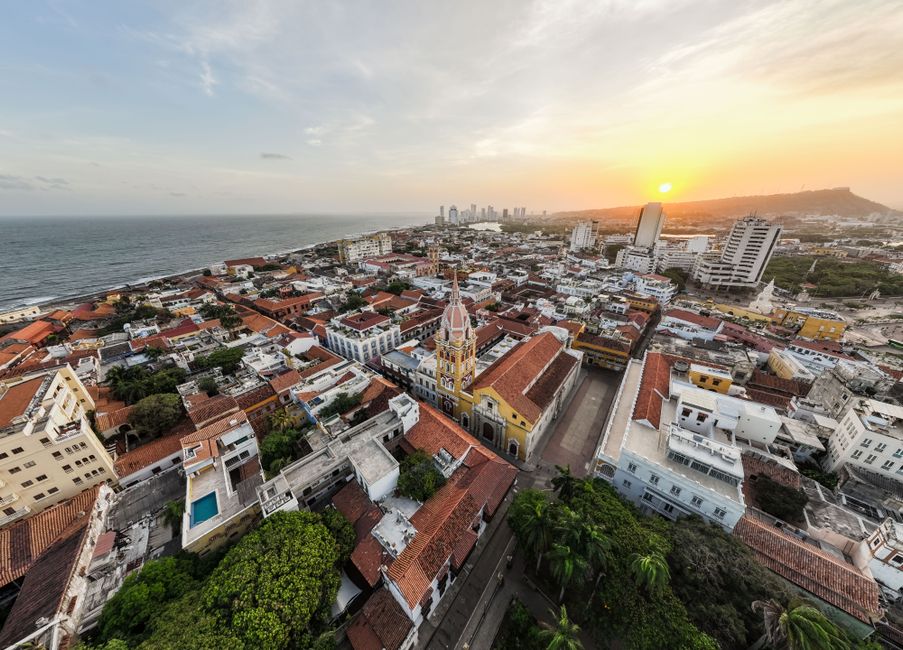
Colombia Weather in September: Cartagena vs. Medellín, Side by Side
September sits squarely in Colombia's rainy season, but that label means something very different depending on which city is on the itinerary. For travelers weighing Colombia weather in September between Cartagena and Medellín, the short version is this: Medellín gets drenched by afternoon thunderstorms but stays remarkably temperate, while Cartagena bakes at the coast with humidity that makes every degree feel worse than it is. Neither city is at its best in September. Both are still worth visiting — just with adjusted expectations and a well-packed bag.
Medellín in September: The Eternal Spring Gets Wet
Medellín's reputation as the "City of Eternal Spring" is earned — its position in the Andes at roughly 1,500 meters (4,900 feet) keeps temperatures stable and relatively mild year-round. In September, daytime highs sit around 26–28°F (79–82°F), with overnight lows dropping to about 16–18°C (61–64°F). That range is genuinely comfortable by tropical standards.
The catch is the rain. September is one of Medellín's two wettest months, with average monthly rainfall around 170–200 mm (6.7–7.9 inches). That precipitation doesn't come as a steady drizzle — it arrives in concentrated afternoon and evening thunderstorms, typically between 2 PM and 7 PM. Mornings are usually clear and usable. The pattern is reliable enough to plan around, but reliable doesn't mean benign: these storms can be intense, occasionally causing flash flooding in lower-lying neighborhoods and disrupting cable car service to Comunas 1 and 2.
Practical Disruptions in Medellín
- The Metrocable to Santo Domingo and Parque Arví suspends service during heavy storms — sometimes for several hours. If Parque Arví is on the list, go on a morning weekday and leave early.
- Guatapé day trips are popular but exposed. The rock climb and lakeside views get genuinely miserable in a downpour, and afternoon storms make the return drive slow. An early departure is essential.
- Humidity in September averages around 80–85%, which is noticeable but manageable at Medellín's elevation. Not comfortable, but not oppressive.
- UV index still reaches 11–12 on clear mornings — extreme range. Sunscreen before 11 AM matters even when rain is forecast for the afternoon.
Cartagena in September: Heat, Humidity, and Not Much Relief
Cartagena sits at sea level on the Caribbean coast, and September is arguably its least pleasant month. Daytime highs average 31–33°C (88–91°F), but the real story is humidity, which regularly exceeds 85–90%. At that level, outdoor sightseeing in the walled city — cobblestones, limited shade, direct sun — becomes a sweaty, draining exercise by mid-morning. That's not catastrophic if it's planned for. It is a problem if someone expects to spend four hours wandering the Old Town at noon.
Rainfall in Cartagena during September totals around 100–130 mm (3.9–5.1 inches), which is actually less than Medellín. The difference is how it falls: shorter, more irregular bursts, sometimes with long dry stretches between events. The rain brings almost no temperature relief — a post-storm Cartagena in September is still 29°C (84°F) and now 95% humidity. Sunset temperatures barely drop below 27°C (81°F).
Practical Disruptions in Cartagena
- Isla Barú and the Rosario Islands boat tours run year-round, but wave conditions in September can be rougher than usual as the Caribbean sees increased tropical activity. Check conditions the day before and accept that some departures get cancelled.
- Walking tours should be booked for early morning — 8 AM start rather than 10 AM makes a significant physical difference when it's 32°C (90°F) before noon.
- September falls during the Atlantic hurricane season. Cartagena is rarely a direct hit target, but tropical systems passing through the Caribbean can bring extended rain and grounded flights. This is worth watching actively, not dismissing.
- The beaches at Bocagrande and Marbella are swimmable but often murky after rain. Water clarity at the Rosario Islands, when boats are running, is considerably better.
Flight Reliability: A September Consideration
Domestic flights between Medellín (José María Córdova International) and Cartagena (Rafael Núñez International) run multiple times daily and are generally quick — around 50 minutes in the air. September complicates this in two ways. First, afternoon thunderstorms around Medellín regularly delay departures out of Rionegro; booking morning flights reduces this risk substantially. Second, Rafael Núñez airport in Cartagena sits close to sea level and near the coast, making it more vulnerable to weather holds when tropical systems approach.
Budget accordingly: a same-day connection that looks fine at 8 AM can turn into a three-hour delay by afternoon. If the itinerary has a hard departure time — a cruise, an international flight — build in a full buffer day rather than a few hours.
Packing for Two Different Climates
Traveling between Medellín and Cartagena in September means packing for two meaningfully different conditions without loading down a bag unnecessarily. A few specific notes:
- Rain shell over umbrella. Both cities get hit with sideways rain. A packable waterproof jacket takes up less space and keeps both hands free.
- Medellín evenings need a layer. At 16–18°C (61–64°F), a light fleece or sweatshirt is genuinely useful — particularly if spending evenings in El Poblado's open-air restaurants or going up to Parque Arví, which sits even higher and cooler.
- Cartagena requires breathable, light clothing. Linen, cotton, technical travel fabrics. Anything that traps heat will be miserable by 10 AM. Dark colors are a bad idea when UV index hits 12 and humidity is at 90%.
- Footwear that handles wet cobblestones. Cartagena's Old Town streets become slick after rain. Sandals with grip or light trail shoes beat flip-flops on wet stone.
For day-to-day forecasts across both cities — including storm timing, humidity breakdowns, and UV index — the WeatherGO app gives location-specific hour-by-hour data useful for planning whether to catch an early cable car or push that Rosario Islands trip to a clearer day.
Which City Is Better in September?
Medellín is the easier city to visit in September. The temperature range is comfortable, the rain has a predictable daily pattern that can be planned around, and the city's indoor and covered attractions — museums, the metro system, the food scene in Laureles and El Poblado — hold up fine in the rain. September crowds are thinner than December or January, and prices reflect it.
Cartagena in September is harder to recommend unreservedly. The heat and humidity combination is genuinely fatiguing, tropical system risk adds a layer of travel uncertainty, and the city's biggest draws — walking the walled city, beach time — are most affected by the conditions. That said, if Caribbean coast access or the Rosario Islands are the priority, September's lower hotel rates and reduced crowds offer real value. Just go in with clear eyes about what the weather will actually feel like.
Key Takeaways
- Medellín averages 170–200 mm (6.7–7.9 inches) of rain in September, concentrated in afternoon storms. Plan outdoor activities before 2 PM.
- Cartagena averages 100–130 mm (3.9–5.1 inches) but with 85–90%+ humidity and highs of 31–33°C (88–91°F). Early mornings are the only comfortable outdoor window.
- Book morning domestic flights in both directions to minimize storm-related delays.
- Pack a rain shell regardless of destination, and add a light layer for Medellín evenings.
- Monitor Atlantic tropical activity actively if Cartagena is the destination — September is peak Caribbean storm season.


