

Notting Hill Carnival to Burning Man in One Week: How to Pack for Two Completely Different Climates Back-to-Back
Packing for Burning Man and UK Festival Season Back-to-Back: A Real Problem With Real Solutions
Anyone researching packing for Burning Man and UK festival season in the same trip will quickly realize the two events occupy nearly opposite ends of the weather spectrum. Notting Hill Carnival runs the last weekend of August in west London, where temperatures average 18–22°C (64–72°F), humidity hovers around 70–75%, and there is a roughly 40% historical chance of at least one rainy day across the bank holiday weekend. Burning Man, held the same week on Nevada's Black Rock Desert, delivers afternoon highs regularly reaching 38–40°C (100–104°F), overnight lows that drop to 10–13°C (50–55°F), UV index readings above 10 by mid-morning, and alkaline dust that destroys gear with impressive efficiency. Doing both in seven to ten days is logistically awkward but not rare. Solving the packing problem requires understanding what each environment actually demands — and finding the specific items that pull double duty without failing at either job.
What London in Late August Actually Looks Like
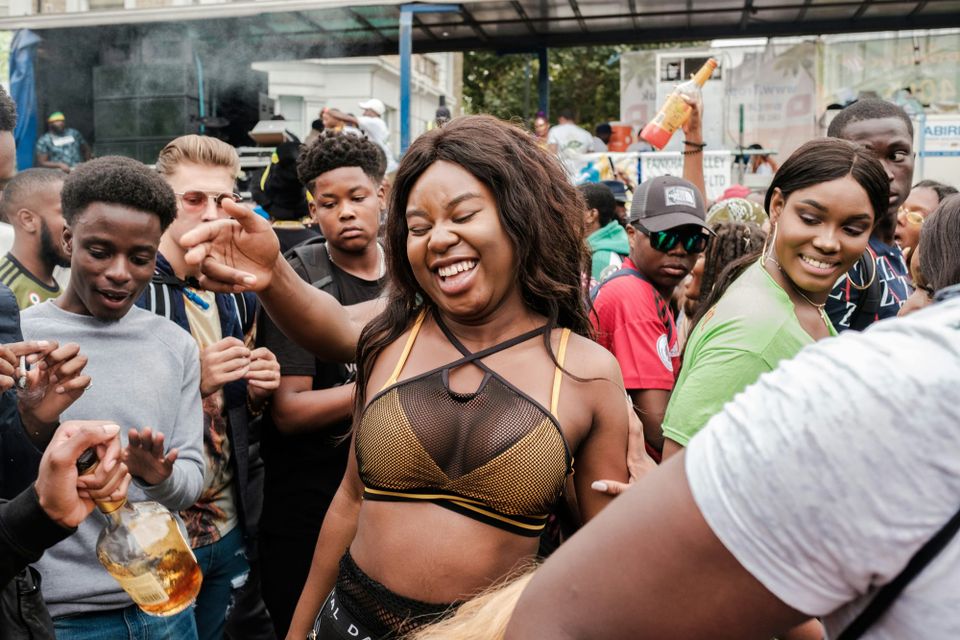
Late August in London is mild by most global standards, but "mild" does not mean comfortable in the way a traveler might hope. The average high of 21°C (70°F) sounds pleasant until a grey front moves in and drops temperatures to 15°C (59°F) with a steady drizzle. The Notting Hill Carnival draws roughly two million people across two days onto streets that were not designed for two million people. The result is a dense, humid crowd environment where standing still for thirty minutes generates enough body heat to render a jacket redundant, yet stepping out of the crowd into the shade — or into actual rain — makes that same jacket immediately necessary.
Rainfall in late August averages around 50mm (2 inches) for the month, distributed unpredictably. The carnival has been soaked before and it has been sunny before. Planning for exactly one outcome is a mistake. The UV index in London at this time of year peaks around 4–5, which is low compared to what awaits in Nevada but still worth acknowledging for fair-skinned travelers spending eight hours outdoors.
Gear the Carnival Demands
- A packable waterproof shell that compresses small — the carnival crowd is not a place for a full-sized rain jacket stuffed in a tote bag
- Footwear that handles wet pavement and extended standing; the route is concrete and cobblestone, not festival mud, but the distances walked are significant
- Light, breathable layers that can be removed and tied around a waist without becoming a liability
- A small crossbody bag or secure belt pack — pickpocketing at large outdoor events in London is not hypothetical
What the Black Rock Desert Actually Does to People and Their Belongings
Burning Man's weather is extreme in multiple directions simultaneously, which is what makes it genuinely difficult to pack for rather than just uncomfortable. The Black Rock Desert sits at approximately 1,190 meters (3,900 feet) elevation, which moderates overnight temperatures significantly below what the afternoon heat suggests. The 28–30°C (50–54°F) swing between daily high and overnight low is not an exaggeration — it is a documented feature of high desert environments at elevation. Showing up with only the clothing that survived London's 20°C (68°F) grey skies is a reliable path to hypothermia risk by 2 a.m.
The dust is its own category of problem. Playa dust is fine, alkaline, and pervasive. It infiltrates sealed bags, clogs zippers, and destroys the coating on synthetic fabrics over a week of exposure. Anything with mesh panels — popular for hot-weather breathability — becomes a dust trap that is nearly impossible to clean. Electronics need protection that goes beyond a sleeve. Goggles are not optional during whiteout conditions, which can arrive with almost no warning and reduce visibility to a few meters.
UV exposure at altitude on an open, completely flat surface with no shade is severe. UV index values of 10–11 are standard by 10 a.m. Sunscreen needs to be reapplied obsessively, and shade structures or UV-blocking fabric become a genuine health consideration rather than a comfort preference.
Gear the Playa Demands
- A warm layer capable of handling 10–13°C (50–55°F) overnights with wind — a mid-weight fleece or insulated vest at minimum, a proper down or synthetic jacket for cold-sensitive travelers
- Goggles with foam seals, not ski goggles with vented frames
- A dust mask or quality respirator; N95 minimum, P100 better
- Closed-toe footwear that can handle alkaline dust all day — sandals that seemed appealing in theory become painful after day two of playa exposure on bare feet
- UV-protective clothing: long sleeves in lightweight, tightly woven fabric, not mesh
- Sealed storage for anything that cannot be replaced mid-event
The Actual Packing Conflicts and How to Resolve Them
The core tension in this trip is bulk versus versatility. Burning Man rewards bringing more layers than expected. London rewards traveling light and staying nimble in crowds. These goals pull in opposite directions, and the solution is not buying separate wardrobes for each — it is identifying pieces that genuinely work in both contexts.
The Packable Shell Does Heavy Lifting at Both Events
A quality ultralight rain jacket — the kind that compresses into its own pocket — works in London as rain protection and in Nevada as a windbreak against dust storms and cold desert nights. This is the single item that earns its weight most clearly across both destinations. Something like an Arc'teryx Atom or a Patagonia Houdini fits this role; the exact brand matters less than the packability and wind resistance. Budget versions exist and some are adequate. Test the zippers before buying — playa dust will find any weakness.
Footwear Is the Hardest Problem
There is no single shoe that optimizes for wet London cobblestones and alkaline desert dust simultaneously. The most practical approach is bringing two pairs: one closed-toe, sturdy shoe or boot for the playa (Blundstones and similar leather ankle boots have a devoted following at Burning Man for good reason — alkaline dust is less destructive to leather than to synthetics), and one comfortable, waterproof walking shoe for London. Both can be worn in either location if needed; the optimization just differs. Anyone hoping to get away with one pair of footwear for both events is going to be unhappy somewhere.
Layering Strategy That Works Across Both Climates
- Base layer: Merino wool t-shirts and a long-sleeve merino top. Merino handles London's mild damp, the playa's heat during the day, and the cold at night. It does not trap odor the way synthetics do during a week without easy laundry access.
- Mid layer: A lightweight fleece or insulated vest. Not needed at the carnival, essential by Burning Man night three.
- Outer layer: The packable shell described above.
- Bottoms: One pair of lightweight trousers that look acceptable in an urban setting works for both; add one pair of shorts for daytime Nevada. Denim is a playa mistake — it holds dust, dries slowly, and chafes.
Protecting Electronics and Documents
London's threat is rain and crowd density. Nevada's threat is dust infiltration and heat (car interiors on the playa can reach temperatures that damage phones and batteries). Waterproof, sealable bags serve both threats. Pelican-style hard cases for anything valuable are not excessive given the conditions.
Before leaving London for Nevada, checking the forecast for both the final carnival days and the incoming playa weather is worth doing. Dust storm activity at Burning Man is not reliably predictable more than 48 hours out, but temperature trends are. The WeatherGO app handles multi-location forecasts cleanly, which is useful when managing two completely different climate situations within the same week.
Practical Takeaways
- The packable rain shell is the only item that does genuine double duty at both events. Prioritize quality here over anywhere else in the kit.
- Merino wool base layers are worth the price for a trip spanning London's humidity and Nevada's temperature extremes.
- Accept that footwear requires two pairs. The London-to-playa single-shoe compromise does not exist.
- Anything going to the playa needs to be considered potentially destroyed or heavily contaminated by dust. Pack accordingly — do not bring items with sentimental or high replacement value unless they can be sealed and protected.
- The 28–30°C (50–54°F) daily temperature swing at Burning Man is real and has sent underprepared people to the medical tent. The warm layers are not optional.
- London rain during Carnival weekend is not guaranteed but is common enough that traveling without waterproofing is simply a bad bet.
- Transit between events matters: the flight from London to Nevada (typically via Las Vegas or Reno) takes 10–12 hours plus layovers. Whatever is in the carry-on needs to bridge that transition, because checked luggage occasionally does not.


