

Ultra Europe Is on the Dalmatian Coast, but Inland Croatia Is 7°C Hotter: What That Means If You're Driving
Croatia Inland vs Coast Temperature July: The Gradient That Catches Festival Travelers Off Guard
In mid-July, Split's Poljud stadium sits at around 31°C (88°F) during Ultra Europe's afternoon hours, moderated by Adriatic airflow and a reliable afternoon sea breeze. Drive 30 kilometers (19 miles) east toward the Dinaric Alps, and that breeze is gone. Drive 130 kilometers (81 miles) northeast to Mostar, Bosnia — a common side trip for Ultra attendees — and the thermometer regularly reads 39°C (102°F). That is not a rounding error. The Croatia inland vs coast temperature July gap is structural, not occasional, and it has real consequences for anyone planning to extend their festival trip into the interior.
Why the Coast and the Interior Are Effectively Two Different Climates
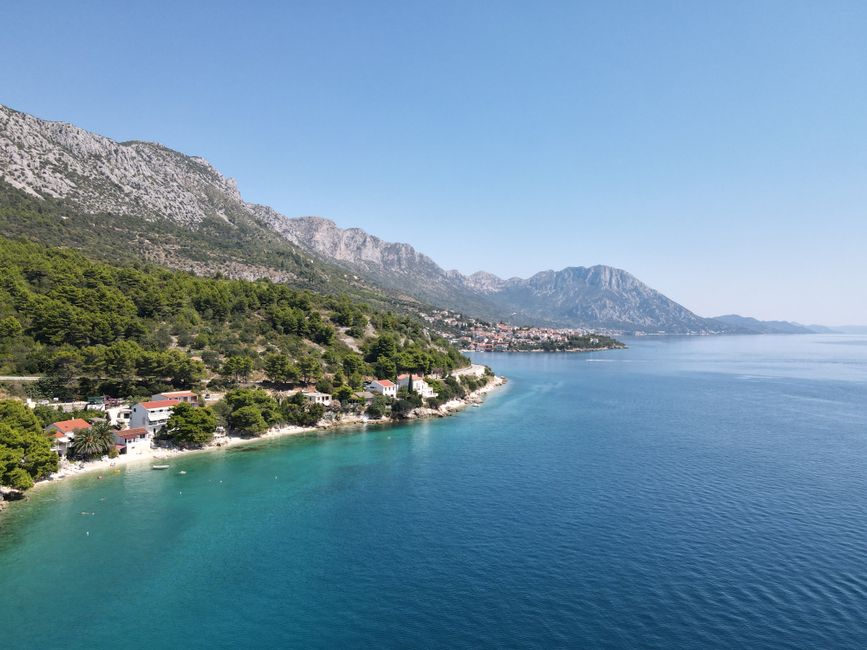
The Dalmatian coast runs in a narrow strip between the Adriatic Sea and the Dinaric karst highlands. The sea acts as a thermal buffer — it absorbs heat slowly and releases it slowly, keeping coastal temperatures from spiking the way landlocked terrain does. Split and the islands rarely exceed 33°C (91°F) in July, and overnight lows drop to around 22–24°C (72–75°F). Humidity stays manageable, typically 50–65%, because the sea breeze circulates air regularly.
Cross the coastal range into the interior — the Neretva Valley, the Herzegovinian basin, the flatlands approaching Mostar — and the geography reverses. The mountains block maritime air. The karst landscape absorbs solar radiation and radiates heat back at ground level. Mostar, sitting at roughly 60 meters (197 feet) elevation in a river valley surrounded by rocky hillsides, functions like a heat sink. July averages there run 36–38°C (97–100°F), with peaks touching 40°C (104°F) during heat events. Overnight lows barely reach 22°C (72°F), which sounds fine until you factor in humidity rising toward 70% after dark.
This is not unique to Mostar. The same dynamic plays out across any inland destination in the region. Imotski, about 80 kilometers (50 miles) from Split, regularly hits 37°C (99°F). The Cetina Canyon corridor climbs similarly. Even Sinj, just 30 kilometers (19 miles) inland from the coast, can run 4–5°C (7–9°F) hotter than Split on the same afternoon.
The Specific Routes Ultra Attendees Take — and What Each One Costs in Degrees
Split to Mostar (130 km / 81 miles)
The most popular post-festival excursion. The drive climbs out of the coastal microclimate within the first 20 kilometers (12 miles), crests the Dinaric range, then descends into the Neretva Valley. By the time you reach Mostar, expect a 7–9°C (13–16°F) jump from Split's daily high. Stari Most and the old bazaar are outdoor experiences with almost no shade. A 2 p.m. arrival in 39°C (102°F) heat with 65% humidity is genuinely punishing — plan to visit before 11 a.m. or after 6 p.m.
Split to Plitvice Lakes (230 km / 143 miles)
Plitvice is a different story. At 650 meters (2,130 feet) elevation, temperatures run 5–7°C (9–13°F) cooler than the coast, putting July highs around 24–27°C (75–81°F). The trade-off is afternoon thunderstorms — the elevated terrain triggers convective storms regularly in July, often building between 2–5 p.m. The boardwalks over the lakes become slippery and crowded; early morning entry (the park opens at 7 a.m.) is the only sensible strategy in summer.
Split to Dubrovnik (230 km / 143 miles via E65)
Coastal the entire way. Dubrovnik in July sits at 30–33°C (86–91°F), similar to Split, but the old city's stone walls and narrow streets trap heat significantly. Inside the walls, surface-level temperatures can feel 3–4°C (5–7°F) higher than official readings. The city walls walk — one of the main tourist draws — is fully exposed, roughly 2 kilometers (1.2 miles) of unshaded stone at altitude. Before 9 a.m. or after 7 p.m. only.
Split to Krka National Park (80 km / 50 miles)
The gorge at Krka sits lower than Plitvice and further inland than Dubrovnik, putting it in a transitional zone. Expect 34–36°C (93–97°F) in July. The waterfall area has reasonable shade, but the approach paths and upper viewing platforms are exposed. Swimming is permitted at Skradinski Buk, which makes a midday visit more tolerable than pure sightseeing — but the car parks and approach roads are exposed to full sun and get brutal by early afternoon.
What to Actually Pack for a Trip That Spans Both Zones
Most Ultra attendees pack for festival conditions: light layers, minimal clothing, shoes for standing on grass or concrete. That kit works fine on the coast. It does not hold up well for a 4-hour walk around Mostar at 38°C (100°F) or a Plitvice afternoon thunderstorm.
- Sun protection is non-negotiable inland. July UV index in the interior regularly hits 9–10 (very high to extreme). A hat with a brim, SPF 50+, and a light long-sleeve option for midday are not excessive — they're functional.
- A packable rain shell matters for Plitvice. Afternoon storms there drop 15–25mm (0.6–1.0 inches) of rain in under an hour. A festival poncho will do; a proper shell is better.
- Water carrying capacity. In 39°C (102°F) heat with moderate exertion, hydration needs run well above normal tourist assumptions. A 1-liter (34 oz) bottle refilled frequently is the baseline; 2 liters (68 oz) is more realistic for full-day inland trips.
- Footwear for variable terrain. Mostar's old city is cobblestone that becomes extremely slippery when wet. Plitvice boardwalks get slick after rain. Festival sneakers handle neither particularly well.
Before any inland leg, check conditions for each specific location — the coast forecast tells you almost nothing about what's happening 50 kilometers (31 miles) east. The WeatherGO app lets you pull forecasts by location and view hourly breakdowns, which matters when you're deciding whether to leave Split at 6 a.m. or noon.
Timing the Interior Visits: A Practical Heat Map
July inland Croatia runs a predictable daily cycle. Temperatures build from roughly 8 a.m., peak between 2–4 p.m., then drop slowly after 6 p.m. In Mostar and the Neretva Valley, the peak window is genuinely dangerous for extended outdoor activity — heat exhaustion risk is real at 39°C (102°F) with high humidity, particularly for people who've already spent several days in festival conditions and are potentially under-slept and under-hydrated.
The most effective strategy is to treat the interior like a morning or evening destination. Arrive early, complete major outdoor sightseeing before noon, find shade or air conditioning for the 1–5 p.m. window, then resume in the early evening. This is not a tip — it's how locals in Mostar and Imotski have always managed July. The afternoon shutdown is baked into the region's culture for a reason.
Bottom Line
- The coast-to-inland temperature gap in Dalmatia in July is 7–9°C (13–16°F) on a typical day and can exceed 10°C (18°F) during heat events.
- Mostar is the most extreme common side trip: expect 37–40°C (99–104°F) and plan outdoor activity exclusively for early morning or evening.
- Plitvice runs cooler than the coast but introduces afternoon storm risk — check hourly forecasts, not just daily highs.
- Dubrovnik stays coastal-warm but the old city concentrates heat; the walls walk is an exposed slog at midday in July.
- Pack for the interior separately from the festival. Sun protection, extra water capacity, and a rain layer cover all scenarios.
- Do not use the Split forecast as a proxy for anywhere more than 20 kilometers (12 miles) inland. It is not accurate enough to matter.


